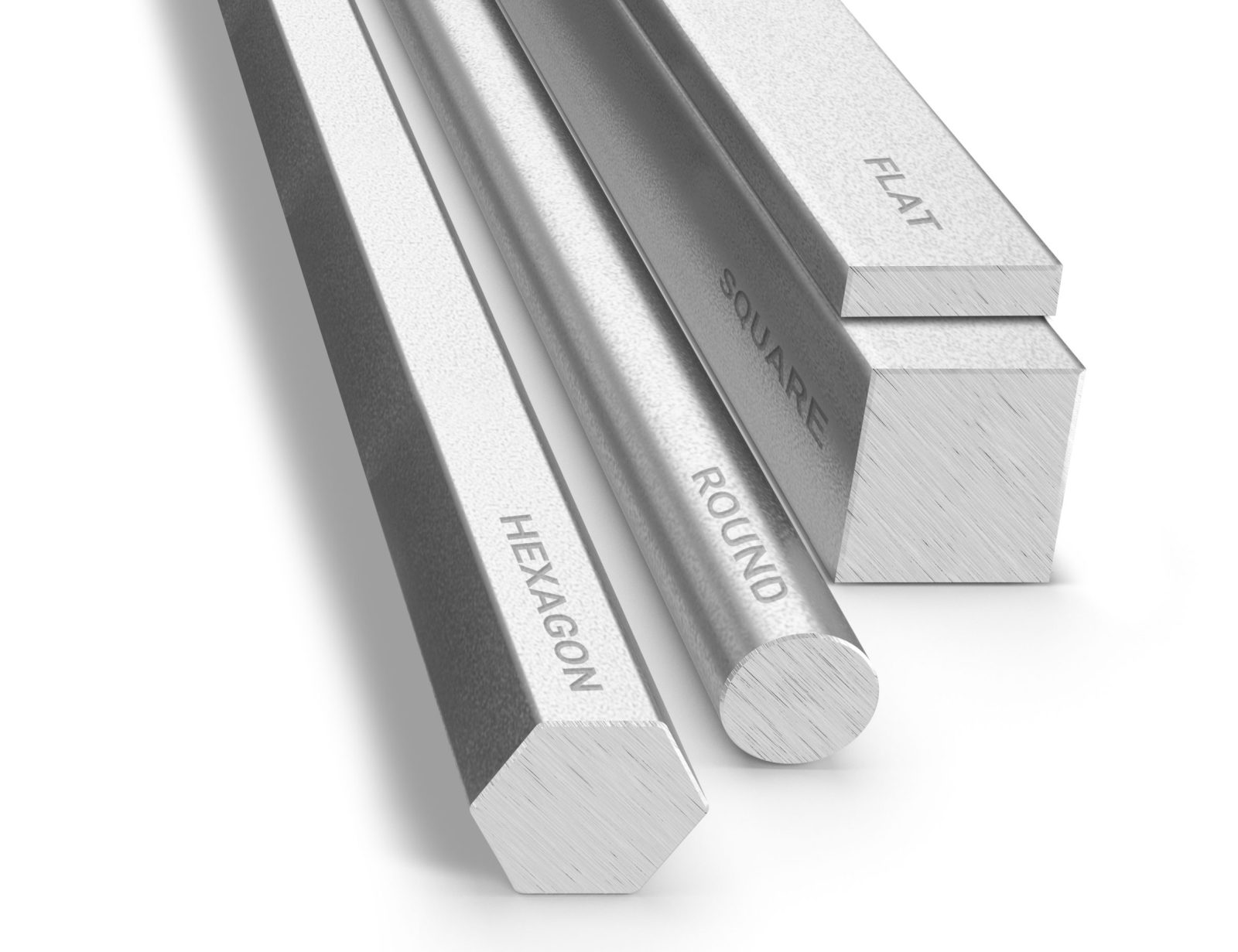
Bar stock is a foundational component of manufacturing across industries, including construction, aerospace, defense, and more. It can be produced with consistency at scale, leading to more efficient, reliable processes. But which metal bar stock shapes are ideal for particular applications?
Here, we’ll compare round vs. hex vs. flat vs. square bar stock, diving into each shape’s benefits and potential downsides. Plus, learn how bar shape affects machinability, cost, and lead time so that you can make the right decision based on the requirements of your finished product.
Round Bar
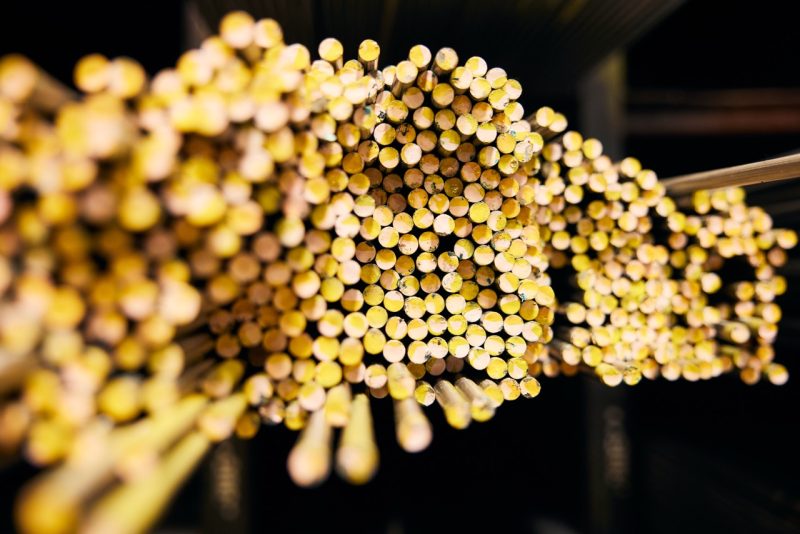
Round bar is in cylindrical form, with a circular cross-section that comes in a variety of diameters. It’s the most common metal bar stock shape because of its:
- Ease and lower cost of production. Round bar stock moves through mill rolls naturally compared to other shapes, making it quicker and more cost-effective to produce, as there’s no extra tooling required to make the initial shape.
- High machinability. Its shape is ideal for CNC lathe operations, resulting in quick production of components such as axels, fasteners, and pins. Round bar stock production also creates less waste during machining because there is less material to remove.
- Ability to withstand high stress. The geometrical shape of round bar stock lends itself to applications of high stress. It yields a high strength-to-weight ratio due to its ability to distribute stress evenly.
- Versatility in manufacturing. This shape, in particular, can be machined into near-endless uses, making it practical for producing landing gear components, structural fittings, and hydraulics parts.
Hex Bar
Hex bar stock is formed in a six-sided shape that’s ideal for applications such as fasteners, fittings, bolts, and wrench components. Here’s what to expect with hex bar:
- More complex production. Compared to other bar stocks, hex bar is more complicated to produce and requires more manufacturing time due to its unique shape. The production process requires more steps to create the specific angles and flat edges, thereby leading to higher total costs.
- Low machining time. If your end product requires wrench flats, then machining time for hex bar stock is lower than when starting with another bar stock shape. That’s because the flat edges already exist, eliminating the need for secondary machining for hex-shaped components.
- Reduced stress and fatigue resistance in certain uses. The sharp edges of hex bar stock result in a lower ability to withstand high amounts of stress and fatigue. That’s why hex is typically not used for applications that require continuous rotation (as with round bar stock).
Flat Bar
Flat bar stock comes in a rectangular shape that’s typically available in many different widths and lengths. It’s ideal for structural, load-bearing, and welded applications where flush mounting and minimal material removal are priorities. Flat bar stock’s highlights include:
- High machinability and fabrication. The broad surface of flat bar stock makes it relatively easy to fabricate after production, whether cutting, welding, or drilling. It’s a highly machinable material (though, depending on the type of metal and alloys).
- Versatility in production and manufacturing. Flat bar stock can be produced and manufactured for various uses, such as structural supports, brackets, mounting hardware, and more.
- Potentially less waste for certain uses. In aerospace (as well as other industries, like construction), components with flat geometries abound, making flat bar stock ideal for many uses, as its manufacturing often produces less waste than other metal bar stock shapes.
- Not as stress resistant. Like hex bar, flat bar stock’s corners don’t withstand stress as well as round bar.
Square Bar
Square bar is solid bar stock where all four sides are equal in width, making this type of bar stock shape structurally sound and beneficial for load-bearing uses. Square bar stock features:
- High machinability and fabrication. Square bar stock is ideal for milling, drilling, and cutting and can have simple production if the end use requires flat surfaces, like frames, structural supports, brackets, fittings, and more. Its flat sides make it easy to clamp and weld during the fabrication process.
- High structural strength. Its shape, with the larger cross-sectional area and rigid, flat sides, allows it to withstand heavy loads, making square bar more suited to certain applications than other bar stock shapes.
- Lower stress and fatigue resistance in certain scenarios. While it’s structurally sound, square bar stock doesn’t resist stress and fatigue during certain circumstances (e.g., rotation, torsion, etc.) like round bar does.
How to Choose Between Metal Bar Stock Shapes
There’s a lot that goes into the decision of which bar stock shape to purchase. Here are some factors to consider:
- End use. Consider the finished product you need to determine which shape of bar stock will be best. The closer the near-net shape is to the finished part, the lower the cost and shorter the lead time.
- Buy-to-fly ratio. This ratio gives you an idea of how much scrap (waste) is produced during machining—and therefore your material efficiency and cost. Calculate the volume of the raw material by the estimated volume of the finished products. A higher buy-to-fly ratio in metal machining often means higher cost, more tool wear, and longer lead time.
- Type of metal and alloys. What metal will work best for the job? Whether you need stainless steel or aluminum alloys, the type of metal and alloy composition influence the bar stock’s machinability, heat treatment processes, surface finish, and more—all of which can affect downstream costs.
Fry Steel: Your Trusted Bar Stock Supplier
With Fry Steel, choose from a wide selection of all four metal bar stock shapes: round, hex, flat, and square. For each shape, we offer a variety of metals, alloys, grades, sizes, and conditions so that customers can obtain the exact material to fit their end product. Plus, Fry provides precision saw cutting services to increase efficiency and reduce machining time. Get started today—reach out to one of our reps.