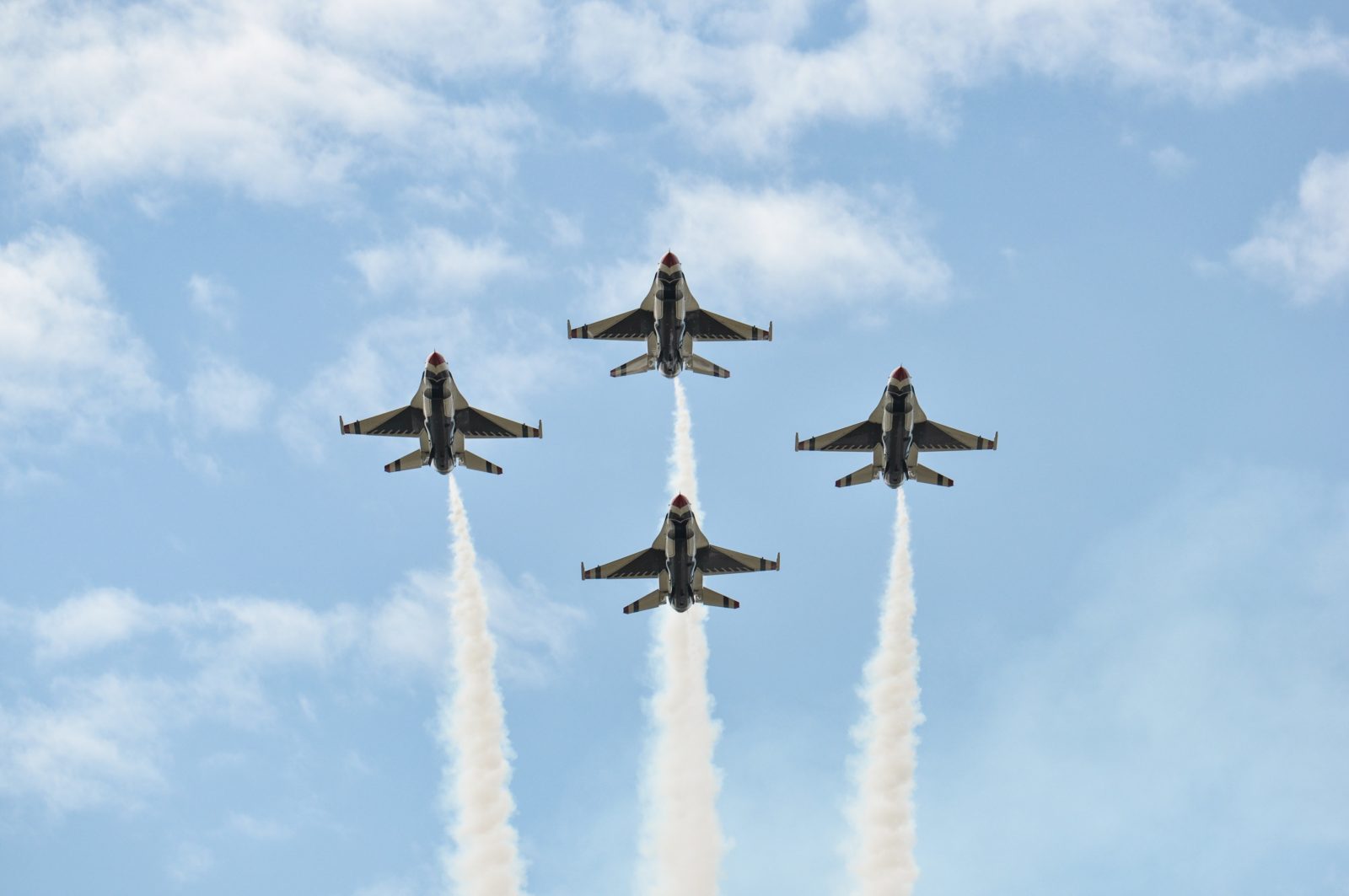
Defense equipment doesn’t leave room for leniency or compromise when it comes to specialty metals. Fighter jets, armored vehicles, missiles, and more each have extreme requirements surrounding temperature, corrosion, fatigue, and strength. The specialty metals chosen for each applications must meet these high standards to support their missions.
Read on to learn all about the most common metals used in defense equipment. This guide covers the properties of each material, their most common uses, and the best grades for defense applications.
Aircraft Alloys
Aircraft alloys, designated as Aircraft Quality or AQ, are metals that meet extremely high testing and manufacturing standards to ensure their quality. These metals are used in defense equipment when the following requirements need to be met:
- High strength-to-weight ratio: The alloy must be very strong, without being excessively heavy.
- High fatigue resistance: It must be able to withstand ongoing stress without cracking or failing.
- Very tough: It must be able to absorb energy and flex or stretch without breaking.
- High heat resistance: The metal must be able to withstand extreme temperatures, often exceeding 900°F.
Common uses of aircraft alloys for fighter jets and other defense aircrafts include high-stress structural components like:
- Drive shafts
- Gear housings
- Weapon system mounts
- Landing gear
- Undercarriage components
- Bulkheads
The most common aircraft alloys are low-alloy steels that contain both chromium and molybdenum to improve their strength and toughness, as well as heat resistance. The most common grades include:
- 4130: Also known as Chromoly, this is an alloy of steel, chromium, and molybdenum with low carbon. It is strong, tough, and very weldable.
- 4140: This Chromoly is very similar to 4130, but has slightly more carbon. This gives it greater strength and hardness, but less weldability.
- 4340: This aircraft alloy for fighter jets adds nickel into the mix. Nickel improves its toughness all the way throughout it, rather than just on the surface.
- D6AC: Contains chromium, molybdenum, vanadium, and nickel. This alloy is specific to the aerospace industry and is used in missile casings and other structural components.
Nickel Superalloys
Nickel superalloys are used for their extreme temperature resistance. They are the primary metals used in defense equipment components that reach temperatures exceeding 1,000°F, the point at which conventional steels fail. They’re also selected for their:
- High corrosion resistance: Nickel superalloys perform well in corrosive marine environments.
- Structural integrity: These metals can withstand thousands of thermal cycles without failing.
- Creep resistance: They must also be able to withstand creep, gradual deformation, at high temperatures or in high-stress environments
In defense equipment, nickel alloys are most commonly used in environments that generate extreme heat, like:
- Turbines
- Rocket motors
- Missiles
- Propulsion systems
- Exhaust systems
Nickel superalloys commonly used in defense equipment include:
- Inconel 718: An alloy made of nickel, chromium, iron, and niobium. The addition of niobium gives this alloy exceptional strength at temperatures up to 1,300°F.
- Inconel 625: Inconel 625 contains nickel, chromium, molybdenum, and niobium. It’s not as strong as Iconocel 718, but has much better corrosion resistance, due to the addition of molybdenum.
- Waspaloy: Waspaloy is among the most temperature-resistant nickel superalloys, withstanding temps up to 1,600°F, but it isn’t as machinable as Inconel. It’s used when temperature resistance is the highest priority.
Precipitation-Hardened Stainless
Precipitation hardening is a heat treating technique that improves the strength and hardness of metals through a process of heating, quenching, and aging. Precipitation-hardened stainless steel provides the strength of high-strength steel, plus good corrosion resistance. Unlike most high-strength steels, precipitation-hardened stainless doesn’t need a protective coating to ward off corrosion.
Precipitation-hardened stainless metal is used in defense equipment for:
- Airframes
- Hydraulic fittings
- Sensor mounts
- Weapon components
- Naval pressure systems
The most commonly used types of PH stainless include:
- 17-4 PH: An iron-based stainless with 17% chromium, 4% nickel, and copper. Chromium provides corrosion resistance and copper enables precipitation hardening.
- 15-5 PH: A very similar stainless that’s slightly more refined, with less chromium and more nickel. Provides better corrosion resistance and consistent performance in all directions.
Aluminium Alloys
Aluminium alloys are the best choice when weight is a concern. These materials deliver the strength of steel, with about a third of the weight. That means lower payload, better fuel range, and less drag.
In defense equipment, aluminium alloys are used for:
- Structural frames
- Bulkheads
- Equipment mounting on armored vehicles
- Armored platforms
- Heat sink structures
Common grades of aluminium alloys include:
- 6061-T6: The most common structural aluminum alloy, made from aluminum, magnesium, and silicon. It has good strength, excellent corrosion resistance, and is highly weldable and machinable.
- 7075-T6: Aluminium, zinc, magnesium, and copper. Zinc gives this alloy some of the highest strength available in aluminium. It’s used when maximum strength-to-weight ratio is needed.
- 2024-T4: Aluminium, copper, and magnesium make this alloy very strong with excellent fatigue resistance, but less corrosion resistance.
Regulatory Standards for Metals Used in Defense Equipment
In mission-critical applications like military defense equipment, the highest standards for performance, reliability, and security are non-negotiable. In order to enforce these standards, the industry relies on two different regulations:
- DFARS compliance: The DFARS Specialty Metals Regulations control where specialty metals used for defense equipment can be sourced from. According to these standards, they may only come from the U.S. or qualifying countries.
- MIL-SPEC traceability: MIL-SPEC traceability outlines specific manufacturing and testing requirements for ballistic armor plate, corrosion-resistant steel, and aluminium alloys used in military applications.
Fry Steel: Your Knowledgeable, Compliant Defense Metals Supplier
With decades of experience in specialty metals for defense, Fry Steel is your go-to DFARS compliant metal supplier. We hold ourselves and our suppliers to the highest global industry quality standards. In addition to compliance with MIL-SPEC, we are ISO 9001, AS9100, and AS9120 certified. Our metals stand at the forefront of defense manufacturing for strong, resilient, and precision-crafted equipment.